
China has become an important sourcing destination for compact construction machinery, offering international buyers access to a wide range of mini excavators for construction, landscaping, agriculture, and property maintenance. From small contractors purchasing their first machine to equipment dealers expanding their product portfolios, buying a mini excavator from China can provide greater equipment choices and competitive purchasing opportunities.
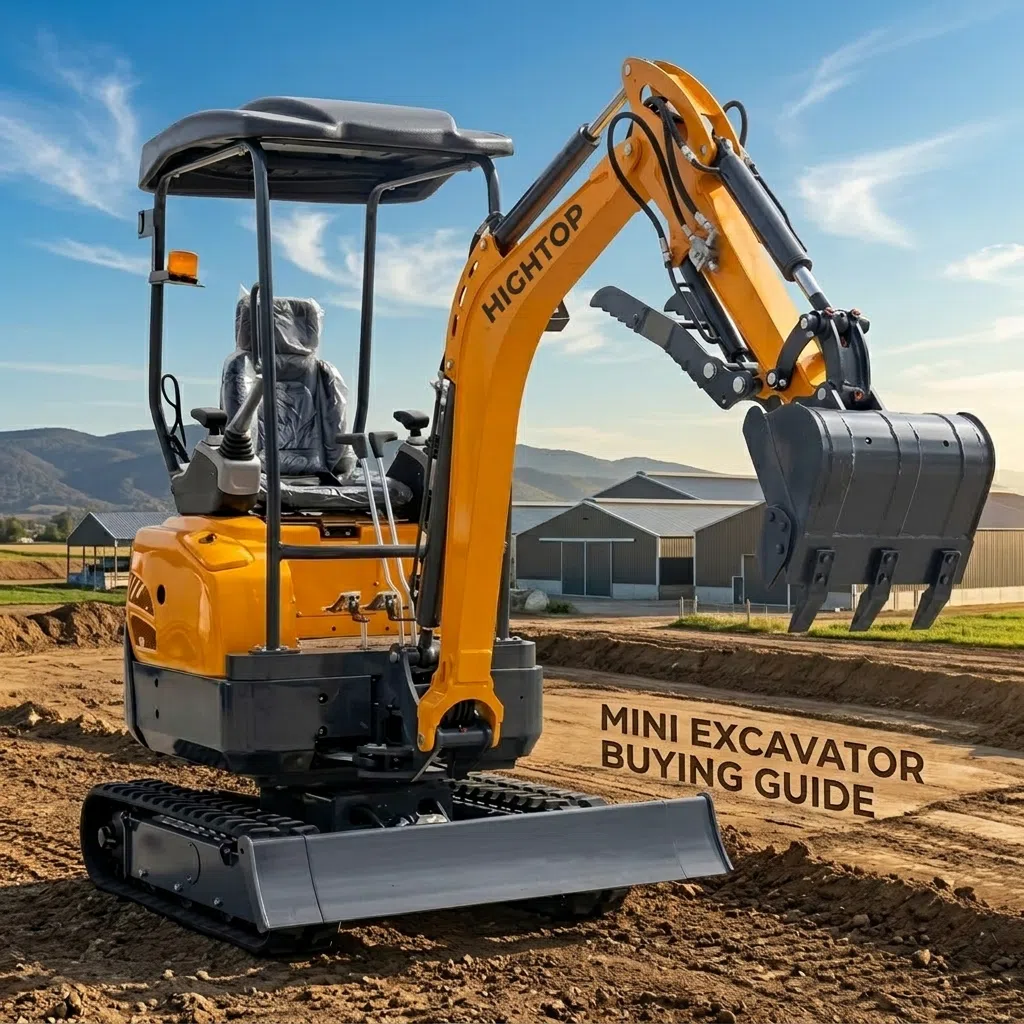
Compact models, such as a1 ton mini excavator, are particularly useful where access is limited and transportation flexibility is important. They can be suitable for gardening, small trenching jobs, greenhouse work, residential projects, and light agricultural applications.
If you are planning to buy a mini excavator from China, this guide explains the essential factors to consider before placing an order and how to make a more informed purchasing decision.
1. Why Do International Buyers Source Mini Excavators from China?
Chinese Hightop mini excavators have attracted attention from overseas buyers because of their diverse configurations, broad application possibilities, and availability through international machinery suppliers.
One important advantage is the variety of equipment options available. Buyers can explore compact machines for residential landscaping, agricultural operations, trenching, utility installation, and general construction without limiting themselves to a narrow selection of models.
Equipment customization is another consideration. Depending on the manufacturer and model, buyers may be able to select different engine configurations, auxiliary hydraulic systems, buckets, attachments, and other optional features.
For machinery dealers, sourcing from China can also create opportunities to develop a more comprehensive compact equipment portfolio. Instead of purchasing a single machine type, distributors may explore complementary equipment such as mini excavators, skid steer loaders, crawler dumpers, and compatible attachments.
Nevertheless, the lowest quoted purchase price does not necessarily represent the best overall value. Product quality, maintenance requirements, spare parts availability, and supplier communication should remain central to the purchasing decision.
2. Determine the Right Mini Excavator for Your Application
Before contacting a Chinese mini excavator supplier, buyers should clearly identify their intended working conditions.
Mini excavators are available in different operating weight classes, and each category is suited to particular applications. Choosing a machine that is too small may limit productivity, while purchasing an unnecessarily large excavator can increase transportation and operating costs.
Small Mini Excavators for Residential and Landscaping Projects
Compact excavators in approximately the 1–2 ton class are commonly considered for residential construction, garden renovation, agricultural maintenance, and other projects where working space is limited.
Their compact dimensions can make them suitable for accessing narrow passages and performing excavation tasks around existing buildings or landscaping features.
When evaluating these machines, buyers should pay particular attention to overall width, maximum digging depth, operating weight, and transportation requirements.
Medium Mini Excavators for General Construction
Machines in approximately the 2–4 ton category can provide a useful balance between compact dimensions and working capability.
They are worth considering for drainage installation, small foundation projects, utility maintenance, and general construction work.
For contractors who regularly perform different types of excavation, auxiliary hydraulic compatibility and attachment options can be especially important.
Larger Compact Excavators for Demanding Projects
For applications involving deeper excavation, heavier material handling, or more demanding construction environments, larger compact excavators may be more appropriate.
In these situations, buyers should evaluate digging force, hydraulic performance, stability, operating weight, and compatibility with the required attachments.
The final selection should always be based on the manufacturer's specifications and the actual requirements of the project rather than machine size alone.
3. Compare Technical Specifications Before Making a Purchase
Two mini excavators with similar operating weights may offer different performance characteristics. This is why buyers should request a complete technical specification sheet instead of relying exclusively on promotional photographs or general product descriptions.
The following specifications deserve particular attention:
| Specification | Why It Matters |
|---|---|
| Operating Weight | Influences stability and transportation requirements |
| Engine Power | Helps assess suitability for the intended workload |
| Maximum Digging Depth | Determines excavation capability |
| Maximum Digging Reach | Affects working coverage |
| Bucket Capacity | Influences material handling per cycle |
| Overall Width | Important for narrow working environments |
| Hydraulic System | Affects operation and attachment compatibility |
| Travel Speed | Relevant to movement around the job site |
Engine selection also deserves careful consideration. Buyers should confirm the engine manufacturer, exact model, fuel requirements, maintenance procedures, and applicable emissions requirements.
For machines intended for international markets, compliance with local regulations must be verified before purchase. An engine configuration suitable for one country may not automatically satisfy the requirements of another.
It is also advisable to request photographs or videos showing the actual machine configuration being quoted.
4. How to Evaluate a Reliable Mini Excavator Supplier in China
Finding a reliable supplier is one of the most important stages of the purchasing process.
Although online marketplaces and international machinery websites make it relatively easy to locate Chinese mini excavator suppliers, buyers should conduct additional checks before transferring payment.
A professional supplier should be able to provide clear product information, explain available configurations, and communicate consistently throughout the purchasing process.
Verify the Supplier's Business Information
Start by reviewing the supplier's company details, product range, business documentation, and available contact information.
Buyers may also request factory photographs, production videos, product inspection information, and relevant business credentials.
These materials can help establish a clearer understanding of the supplier's operations.
For larger orders, arranging an independent factory or pre-shipment inspection may provide additional reassurance.
Evaluate Product Knowledge and Communication
Reliable communication is particularly important when purchasing machinery internationally.
A knowledgeable supplier should be able to explain differences between excavator models, recommend configurations based on working conditions, and provide information about attachments and replacement parts.
Pay attention to how accurately the supplier responds to technical questions.
Unclear specifications, inconsistent quotations, or reluctance to provide essential documentation should be investigated before proceeding.
Confirm After-Sales Support
Mini excavators require regular maintenance, and replacement components may eventually be needed.
Before purchasing, ask the supplier about warranty conditions, technical assistance, spare parts availability, and procedures for handling potential equipment problems.
Understanding these arrangements in advance can help reduce operational uncertainty after the machine arrives.
5. Understand the Total Cost of Importing a Mini Excavator from China
One of the most common mistakes international buyers make is comparing machinery quotations without considering the complete import cost.
The price displayed in a supplier's quotation may cover only the equipment itself, depending on the agreed delivery terms.
Additional expenses can include inland transportation, export handling, international freight, insurance, customs clearance, import duties, applicable taxes, and delivery to the final destination.
For example, a buyer comparing two suppliers should confirm whether both quotations use the same Incoterms and include equivalent machine configurations.
Common international trade terms include:
EXW (Ex Works): The buyer assumes responsibility for arranging transportation from the agreed delivery point and managing subsequent logistics obligations under the contract.
FOB (Free on Board): For sea freight, the seller delivers the goods on board the nominated vessel at the agreed port of shipment, with responsibilities allocated according to the applicable Incoterms rules.
CIF (Cost, Insurance and Freight): The seller arranges and pays for freight and the required level of insurance to the named destination port, although risk transfers when the goods are loaded on board at the shipment port.
These terms affect cost allocation, transportation responsibilities, and risk. Buyers should confirm the agreed Incoterms version and named location in their purchase contract.
A more accurate purchasing budget should consider the total landed cost rather than the initial machine quotation alone.
6. Check Import Regulations and Required Documentation
Importing a mini excavator involves regulatory requirements that vary by destination country.
Before confirming an order, buyers should consult their customs broker or relevant local authorities to determine which documents, certifications, and technical requirements apply.
Depending on the destination and machine configuration, documentation may include a commercial invoice, packing list, bill of lading, certificate of origin, technical documents, and applicable conformity documentation.
Engine emissions regulations and machinery safety requirements should also be checked carefully.
For example, buyers importing equipment into the European Union should verify the applicable machinery and non-road mobile machinery emissions requirements. Buyers in the United States should confirm relevant EPA requirements and any other applicable import obligations.
Import eligibility should never be assumed solely because a machine has previously been exported to another country.
Discussing these requirements with your supplier before production or shipment can help prevent avoidable customs delays and additional expenses.
7. Consider Attachments and Future Equipment Requirements
A mini excavator can perform more than standard digging operations when equipped with suitable attachments.
Depending on the machine's hydraulic configuration and technical compatibility, available options may include narrow buckets, grading buckets, hydraulic breakers, augers, and grapples.
For example, a landscaping contractor may benefit from multiple bucket configurations, while a utility installation company may require a narrow trenching bucket or an auger for specific tasks.
However, not every attachment is compatible with every excavator.
Buyers should verify hydraulic flow, operating pressure, attachment weight, mounting dimensions, and any additional hydraulic circuit requirements before placing an order.
Purchasing suitable attachments together with the excavator may simplify procurement and international shipping arrangements.
It is also worth considering future business development. Selecting a machine that supports several practical applications can help contractors adapt to changing project requirements.
8. Inspect the Machine Before Shipment
Pre-shipment inspection is an important part of international machinery procurement, especially when buyers cannot visit the supplier's facility in person.
Before arranging final shipment, request confirmation that the excavator matches the agreed specifications and order configuration.
An inspection should cover the machine's general appearance, engine operation, hydraulic functions, control systems, tracks, attachments, and identification information.
Buyers may request operating videos showing the excavator starting, traveling, rotating, and performing basic digging movements.
For larger procurement projects, an independent inspection service can provide an additional verification process.
It is also important to confirm the packing method and shipping arrangements, particularly when transporting multiple machines or additional attachments in the same shipment.
Clear inspection and acceptance procedures should be agreed upon before final payment.
9. Buying Mini Excavators from Hightop
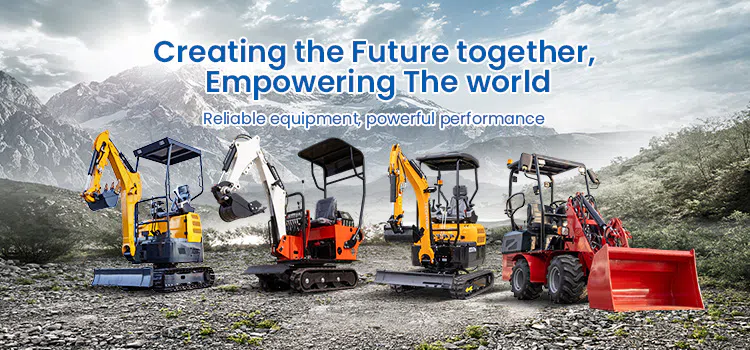
For international buyers seeking compact construction machinery, Hightop offers a range of equipment options designed for different working environments.
Its product portfolio includes mini excavators and other compact machinery that can support construction, landscaping, agricultural, and material-handling applications.
When exploring Hightop mini excavators, buyers can compare available models according to operating weight, dimensions, digging capabilities, and intended applications.
Providing detailed project requirements during the initial inquiry can help the sales team identify potentially suitable equipment configurations.
Useful information to share includes the destination country, intended application, preferred operating weight, required attachments, estimated purchase quantity, and expected delivery requirements.
This information also helps clarify the quotation scope and identify technical or shipping considerations at an early stage.
Buyers should request the latest product specifications and confirm available configurations directly before making their final purchasing decision.
10. Final Checklist Before Ordering a Mini Excavator
Buying a mini excavator from China can be a practical sourcing option when the purchasing process is supported by careful research and clear communication.
Before confirming an order, ensure that you have:
- Selected a suitable excavator based on actual working conditions.
- Reviewed the complete technical specifications.
- Verified supplier information and product configuration.
- Confirmed warranty terms and spare parts arrangements.
- Understood the quotation, Incoterms, and total import costs.
- Checked applicable destination-country regulations.
- Agreed on inspection, payment, and shipping arrangements.
Taking these precautions can help buyers make more informed purchasing decisions and establish a stronger foundation for long-term equipment operation.
Find the Right Hightop Mini Excavator for Your Project
Whether you are purchasing your first mini excavator, upgrading your construction equipment, or sourcing machinery for distribution, selecting the right configuration is an essential first step.
Explore Hightop's available mini excavator models and contact our team to discuss your working requirements, attachment options, and international purchasing needs.
Contact Hightop today to request product specifications and a quotation for your next mini excavator purchase.


