
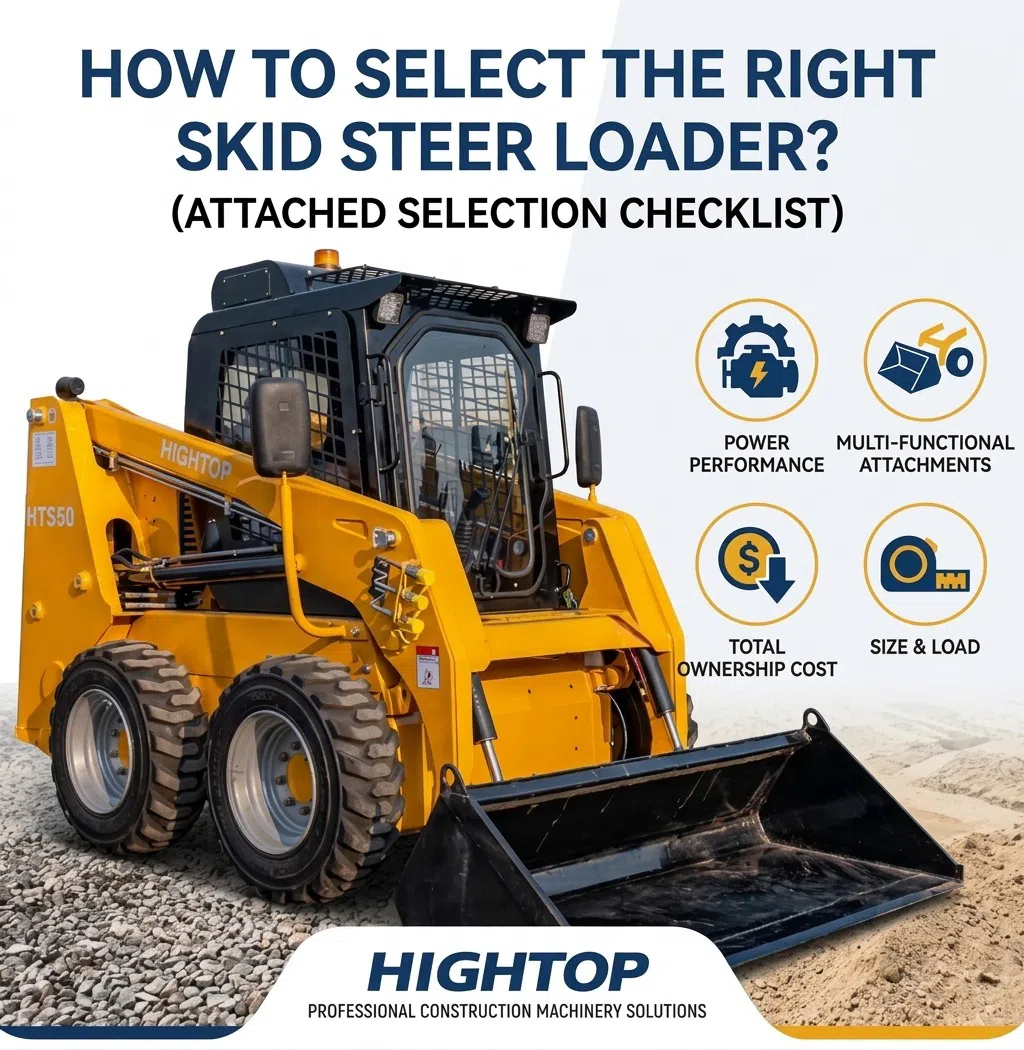
Choosing the right skid steer loader is an important decision for construction companies, contractors, landscaping businesses, and equipment rental operators. Although skid steer loaders are compact machines, they can handle a wide range of material handling, earthmoving, loading, grading, and site preparation tasks. Their versatility makes them useful across construction sites, farms, warehouses, road maintenance projects, and other working environments.
However, not every skid steer loader is suitable for every project. Machine size, rated operating capacity, engine performance, hydraulic flow, attachment compatibility, and ground conditions all influence how effectively a loader performs in daily operations.
Before purchasing a skid steer loader, buyers should evaluate their actual working requirements rather than choosing a machine based only on price or appearance. This guide explains the key factors to consider when selecting a skid steer loader for your business.
1. Identify Your Main Working Applications
The first step in choosing a skid steer loader is understanding what you expect the machine to do. Different projects place different demands on equipment, and identifying your main applications will help narrow down the available options.
Common applications include:
Construction and Site Preparation
Skid steer loaders are frequently used to move soil, sand, gravel, and construction materials. They can also support site clearing, backfilling, surface leveling, and general material handling.
For construction contractors, a machine with suitable lifting capacity, stable operation, and compatible bucket attachments is important.
Landscaping and Property Maintenance
Landscaping projects often involve working in confined spaces around buildings, gardens, pathways, and residential properties. A compact skid steer loader can help move soil, transport landscaping materials, remove debris, and prepare ground surfaces.
In these applications, overall machine dimensions and maneuverability may be more important than maximum lifting capacity.
Agriculture and Farm Operations
On farms, skid steer loaders can be used to move feed, transport materials, clean working areas, and handle various agricultural supplies. Different attachments can expand their usefulness across seasonal tasks.
Road Maintenance and Municipal Work
For road maintenance, snow removal, and public area maintenance, skid steer loaders can perform a variety of jobs when equipped with suitable attachments. Buyers should consider the surface conditions, required hydraulic performance, and frequency of attachment changes.
Understanding these applications helps determine which machine configuration will provide the most practical value.
2. Choose the Right Machine Size and Operating Capacity
Machine size is one of the most important factors when purchasing a skid steer loader. A larger machine may offer greater lifting capability, but it can also require more operating space and may be less suitable for restricted job sites.
A compact skid steer loader is often a practical choice for residential construction, landscaping, and small property maintenance projects. Larger configurations may be more appropriate for demanding material handling and construction applications.
When comparing different models, pay attention to the following specifications:
- Rated Operating Capacity (ROC): Indicates the load the machine is designed to handle under specified operating conditions.
- Operating Weight: Affects transportation requirements, ground pressure, and machine stability.
- Overall Dimensions: Determine whether the machine can access narrow passages, gates, and confined working areas.
- Lift Height: Influences whether the loader can place materials into trucks, containers, or other elevated positions.
- Bucket Capacity: Helps determine how much material can be moved in each loading cycle.
Do not select a machine simply because it has the highest rated capacity. The right choice should match your regular workload, available working space, and transportation conditions.
3. Consider the Engine and Power Performance
Engine performance directly affects the productivity of a skid steer loader. A suitable engine should provide sufficient power for the machine's intended applications while supporting stable operation during repeated loading and material handling.
When evaluating engine configurations, consider:
Engine Power
Higher engine power may be beneficial for demanding applications, but the required output depends on machine size, hydraulic requirements, attachment type, and working conditions.
Fuel Consumption
Fuel consumption is an important factor in long-term operating costs. Businesses operating equipment for extended periods should consider fuel efficiency alongside purchase price.
Cooling and Operating Conditions
Construction sites can expose machinery to dust, high temperatures, and extended working hours. An appropriate cooling system and regular maintenance are important for maintaining reliable operation.
Maintenance and Spare Parts
Before purchasing, check whether replacement filters, engine components, and other maintenance parts are reasonably accessible in your operating region. Easy access to spare parts can reduce downtime and simplify equipment maintenance.
The best engine configuration is not necessarily the most powerful one. It should provide an appropriate balance between performance, operating cost, and maintenance requirements.
4. Evaluate the Hydraulic System and Attachment Compatibility
One of the biggest advantages of a skid steer loader is its ability to work with different attachments. This versatility allows one machine to perform multiple tasks, reducing the need to purchase separate equipment for every application.
However, attachment performance depends heavily on hydraulic system compatibility.
Before choosing a machine, consider the following:
- Hydraulic Flow Rate: Determines the hydraulic oil volume supplied to compatible attachments.
- Hydraulic Pressure: Influences whether the system can operate attachments within their required pressure range.
- Auxiliary Hydraulic Connections: Check whether the machine has the appropriate hydraulic connections for the attachments you intend to use.
- Attachment Mounting System: Confirm that the attachment interface is compatible with the equipment.
- Electrical Connections: Some attachments may require additional electrical controls or connections.
Common skid steer loader attachments include:
| Attachment | Main Application |
|---|---|
| General-purpose bucket | Loading soil, sand, and gravel |
| Pallet forks | Moving pallets and packaged materials |
| Grapple bucket | Handling branches, debris, and irregular materials |
| Auger | Drilling holes for posts and foundations |
| Trencher | Digging narrow trenches |
| Snow blade | Clearing snow from roads and working areas |
| Sweeper | Cleaning roads, yards, and paved surfaces |
Before purchasing additional attachments, verify the manufacturer's compatibility requirements. A machine that supports your most frequently used attachments can provide greater operational flexibility.
5. Select the Right Tires or Track Configuration
Ground conditions have a significant influence on skid steer loader performance. Buyers should consider where the equipment will operate most frequently.
Wheeled Skid Steer Loaders
Wheeled skid steer loaders are commonly used on relatively firm surfaces such as concrete, asphalt, compacted soil, and general construction ground.
Their advantages may include:
- Suitable for many general construction and material handling tasks.
- Convenient operation on firm and relatively even surfaces.
- Generally straightforward tire replacement and maintenance.
However, tire selection and ground conditions should be considered carefully when operating on loose, muddy, or uneven terrain.
Tracked Skid Steer Loaders
Tracked configurations can provide a larger ground contact area and may offer advantages when working on soft soil, muddy surfaces, and uneven ground.
Potential benefits include:
- Lower ground pressure in suitable operating conditions.
- Improved traction on certain soft surfaces.
- Better suitability for some landscaping and site preparation applications.
The choice between wheels and tracks should depend on actual site conditions, transportation requirements, maintenance costs, and expected working hours.
6. Check Operator Comfort, Safety, and Ease of Maintenance
A skid steer loader is often used for repeated operations throughout the working day. Operator comfort and machine accessibility can therefore influence overall productivity.
When inspecting a machine, consider the following features:
Operator Visibility
Good visibility helps operators monitor the bucket, surrounding work area, and nearby personnel. The cab design and window arrangement should provide a practical view during normal operation.
Control System
The controls should be understandable and responsive. Buyers should consider whether the control layout is suitable for their operators and intended applications.
Safety Features
Check the availability and operation of appropriate safety equipment, such as seat belts, safety interlocks, protective structures, and warning systems. Actual equipment varies by model and configuration.
Maintenance Accessibility
Daily inspection and routine servicing should be straightforward. Check access to the engine compartment, filters, hydraulic components, and other maintenance points.
A machine that is easier to inspect and maintain can help reduce unnecessary downtime over its service life.
7. Calculate the Total Cost of Ownership
The purchase price is only one part of the cost of owning a skid steer loader. Businesses should also evaluate long-term operating expenses before making a decision.
Important cost factors include:
- Initial equipment purchase price.
- Fuel or energy consumption.
- Routine maintenance and replacement parts.
- Tire or track replacement.
- Attachment purchase and maintenance.
- Transportation and delivery.
- Operator training and operating costs.
- Expected equipment utilization and downtime.
For equipment rental companies and contractors, machine utilization is especially important. A versatile machine that can perform several different tasks may provide better business value than equipment designed for only one specific application.
Buyers should compare machines based on their expected workload and operating costs rather than focusing exclusively on the lowest initial price.
8. Choose a Reliable Skid Steer Loader Manufacturer
Selecting the right machine is only part of the purchasing process. Choosing a reliable manufacturer and supplier is equally important, especially for overseas buyers.
Before placing an order, consider the following questions:
- Does the manufacturer provide detailed product specifications and configuration information?
- Can the supplier explain the engine, hydraulic system, and attachment compatibility?
- Are spare parts and technical support available for overseas customers?
- Can the manufacturer provide product inspection information before shipment?
- Are shipping arrangements, packaging, and delivery terms clearly explained?
- Does the supplier have experience serving international markets?
Buyers should request relevant product documentation and confirm the actual machine configuration before making a purchasing decision.
For international orders, it is also important to clarify the quotation, payment terms, shipping arrangements, warranty conditions, and after-sales support.
A supplier that communicates clearly and provides practical technical assistance can make the purchasing process more predictable.
9. A Practical Skid Steer Loader Buying Checklist
Before choosing a model, use the following checklist to compare available machines:
| Evaluation Item | What to Check |
|---|---|
| Main application | Construction, landscaping, agriculture, or material handling |
| Rated operating capacity | Whether it matches your regular workload |
| Operating weight | Transportation and ground conditions |
| Machine dimensions | Access to restricted working areas |
| Engine performance | Power, fuel consumption, and maintenance |
| Hydraulic system | Flow, pressure, and auxiliary connections |
| Attachments | Compatibility with your required tools |
| Tires or tracks | Suitability for the working surface |
| Operator safety | Visibility, controls, and protective features |
| After-sales support | Spare parts, technical assistance, and warranty |
| Total cost | Purchase, operation, maintenance, and transportation |
Comparing these factors can help you avoid purchasing equipment that is either insufficient for your workload or unnecessarily expensive for your actual requirements.
Conclusion: Choose a Skid Steer Loader That Fits Your Business
The right skid steer loader should match your working environment, daily workload, attachment requirements, and long-term operating budget. Instead of focusing on a single specification, evaluate the complete machine configuration and consider how it will perform across your regular projects.
For contractors, landscaping companies, agricultural operators, and equipment distributors, choosing a suitable skid steer loader can improve work efficiency and expand the range of services your business can provide.
HIGHTOP offers construction machinery solutions for different working requirements. If you are considering purchasing a skid steer loader, contact the HIGHTOP team to discuss available models, technical specifications, attachment options, and configuration requirements for your market.
Contact HIGHTOP to find a skid steer loader that matches your business needs.


