
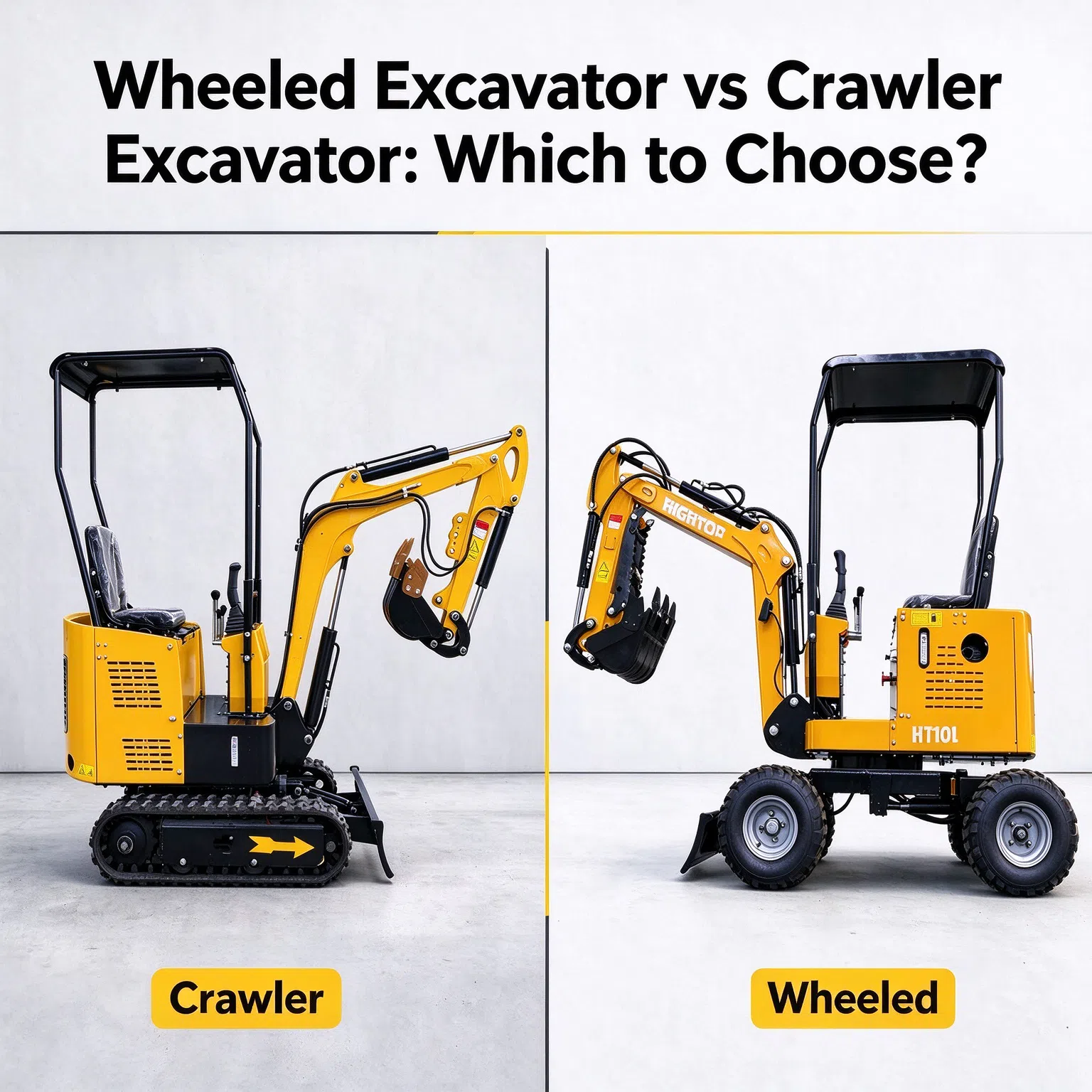
When purchasing an excavator, many contractors face the same question: should they choose a wheeled excavator or a crawler excavator? Although both machines perform excavation and earthmoving tasks, neither is universally better. The right choice depends on the working conditions and project requirements.
As a manufacturer of both wheeled and crawler excavators, we aim to provide an objective comparison of their features, advantages, and limitations to help you make an informed purchasing decision.
Crawler Excavators
The crawler undercarriage is the key advantage of a crawler excavator. With low ground pressure and strong traction, it performs well on muddy construction sites, mountainous terrain, mining areas, and large-scale earthmoving projects.
Its tracks provide stable contact with the ground, making it less likely to slip or sink on soft and uneven surfaces. Crawler excavators also offer excellent stability during heavy-duty operations, making them a reliable choice for demanding working conditions.
However, crawler excavators also have some limitations.
They cannot travel independently on public roads. Moving between job sites generally requires a trailer or transport vehicle, which increases transportation costs and scheduling time.
In addition, undercarriage components such as tracks, track rollers, and idlers are subject to wear. Over time, maintenance expenses and equipment depreciation can be relatively high.
Wheeled Excavators
Wheeled excavators use a tire-based undercarriage, with mobility being their main advantage.
They can travel independently on paved roads, making short-distance movement between nearby job sites more convenient without requiring a transport trailer. This improves scheduling flexibility and overall operating efficiency.
Their tires are also generally more suitable for working on asphalt and concrete surfaces, helping reduce damage to paved roads. These advantages make wheeled excavators particularly useful for urban redevelopment, municipal construction, landscaping, and other projects involving frequent movement between locations. Routine maintenance is also relatively straightforward.
However, wheeled excavators have limitations when working on soft or uneven terrain.
Because their tires provide a smaller ground contact area than crawler tracks, they generally offer less traction on muddy ground, soft marshy surfaces, and steep mining terrain. They are more likely to slip in these conditions, and their stability during heavy-duty operations is generally lower than that of crawler excavators.
For this reason, wheeled excavators are better suited to paved roads, firm ground, and construction sites where frequent short-distance travel is required.
How to Choose the Right Excavator
The best choice depends on your actual working conditions and transportation requirements.
Choose a crawler excavator for mining operations, large-scale earthmoving, and long-term work on muddy, soft, or uneven terrain.
Choose a wheeled excavator for municipal construction, urban redevelopment, landscaping, scattered construction projects, and jobs that require frequent short-distance travel on paved roads.
Before purchasing an excavator, consider the ground conditions at your job sites, the type of work you perform, and how often the machine needs to move between locations.
Don't choose a machine simply because it is popular. Choose the one that matches your working conditions. The right equipment can improve productivity, control operating costs, and deliver better value over the long term.


